Artisanal vs artesian is a mix-up that shows up in menus, marketing copy, and product labels with surprising regularity. Both words carry a faint air of quality and craft, which is probably why they get swapped. But they come from different roots, describe different things, and aren't interchangeable in any context.
What artisanal means
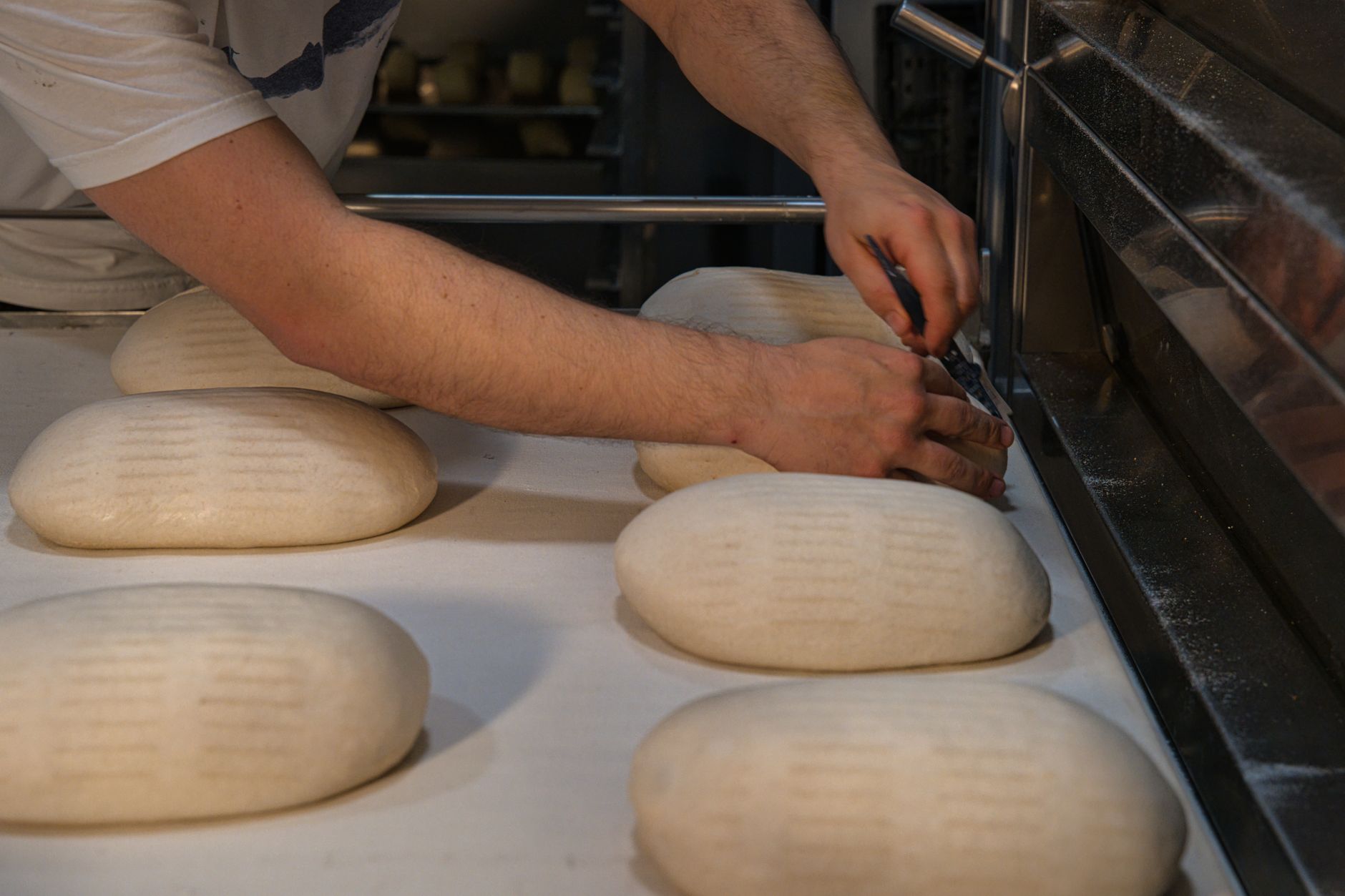
Artisanal is an adjective meaning made by hand, in small quantities, using traditional or non-industrial methods. The word comes from "artisan," which English borrowed from the French artisan and ultimately from the Italian artigiano, meaning a craftsperson. An artisanal loaf of bread is one baked by a skilled baker using hand techniques. Artisanal cheese is aged in small batches, not produced on an assembly line.
The word carries strong connotations of skill, care, and authenticity. It turns up in food, drink, fashion, and design contexts, usually to signal that something was made by a person rather than a machine. In recent years artisanal has also attracted criticism for overuse: the label gets applied to everything from coffee to concrete, sometimes with little justification. That criticism doesn't change its meaning, though. Artisanal still correctly describes handcrafted, small-scale production.
- Artisanal bread, cheese, chocolate, beer
- Artisanal pottery, jewellery, furniture
- Artisanal fishing (small-scale, traditional methods)
What artesian means
Artesian is a geological term. It describes a type of well or water system where water rises naturally to the surface under its own pressure, without needing a pump. The word comes from Artois, a historical region of northern France, where this type of pressurised well was first recorded in the 12th century. An artesian aquifer is a layer of water-bearing rock confined between two impermeable layers, so the water is under natural pressure.
Artesian water is groundwater. The pressure builds because the water source sits higher than the well opening, and the confined layers prevent the water from escaping until a borehole is drilled. Many natural springs are artesian in nature. Bottled water brands use the word artesian to describe water drawn from these confined aquifers, which is technically accurate, though the marketing implications often stretch beyond the geology.
Artesian describes a physical water system. It has nothing to do with craftsmanship, skill, or human production methods.
Why people confuse artisanal and artesian
The confusion has two main drivers. First, the two words share a similar sound: both start with "arti-" and have three syllables when spoken quickly. Second, both words appear on product packaging in contexts that suggest quality. "Artesian spring water" sits on supermarket shelves next to "artisanal sourdough," and readers absorb them as a matching pair of upmarket descriptors rather than as words with distinct meanings.
The error usually runs one way: writers reach for "artesian" when they mean "artisanal." You'll see "artesian bread" or "artesian chocolate" in restaurant copy, where the writer intended to say the product was handcrafted. This is always wrong. Water can be artesian. Bread cannot. If the word you want points to craftsmanship, the word is artisanal. Just as writers who study alternate vs alternative discover that similar-sounding words can diverge sharply in meaning, artisanal and artesian follow the same pattern.
A quick test
Ask yourself what you're describing. If it's a method of production involving skill and hand-craft, you want artisanal. If it's a type of well or water source where pressure pushes water to the surface naturally, you want artesian. The two words never overlap.
It also helps to think about origin. Artisanal traces to "artisan," a craftsperson. Artesian traces to Artois, a place in France. One is about people and skill; the other is about geology and pressure. Keeping that distinction in mind is the fastest way to avoid the mix-up. This kind of root-tracing works across many confusing pairs: understanding how a word was formed often dissolves the confusion instantly, much the same way that unpacking eminent vs imminent vs immanent becomes straightforward once you trace each word back to its Latin origin.
Examples in sentences
Seeing both words used correctly in context makes the distinction stick faster than any definition alone.
Artisanal (correct uses): "The bakery sells artisanal rye loaves made by two bakers using a 48-hour fermentation process." / "She trained for three years before opening her artisanal jewellery studio in Porto."
Artesian (correct uses): "The farm draws its water from an artesian well drilled 90 metres into a confined aquifer." / "FIJI Water markets itself as artesian water sourced from a natural artesian aquifer in the Yaqara Valley."
Common error: "Our artesian chocolates are hand-tempered in small batches." This sentence should read artisanal. Chocolate cannot be artesian; only water systems can.
Summary
Artisanal describes something handcrafted in small quantities using traditional skill. Artesian describes a water system where groundwater rises under natural pressure. The words share a similar opening sound and both appear in quality-focused marketing, but they never mean the same thing. When in doubt: if it involves a craftsperson, write artisanal. If it involves a well, write artesian.