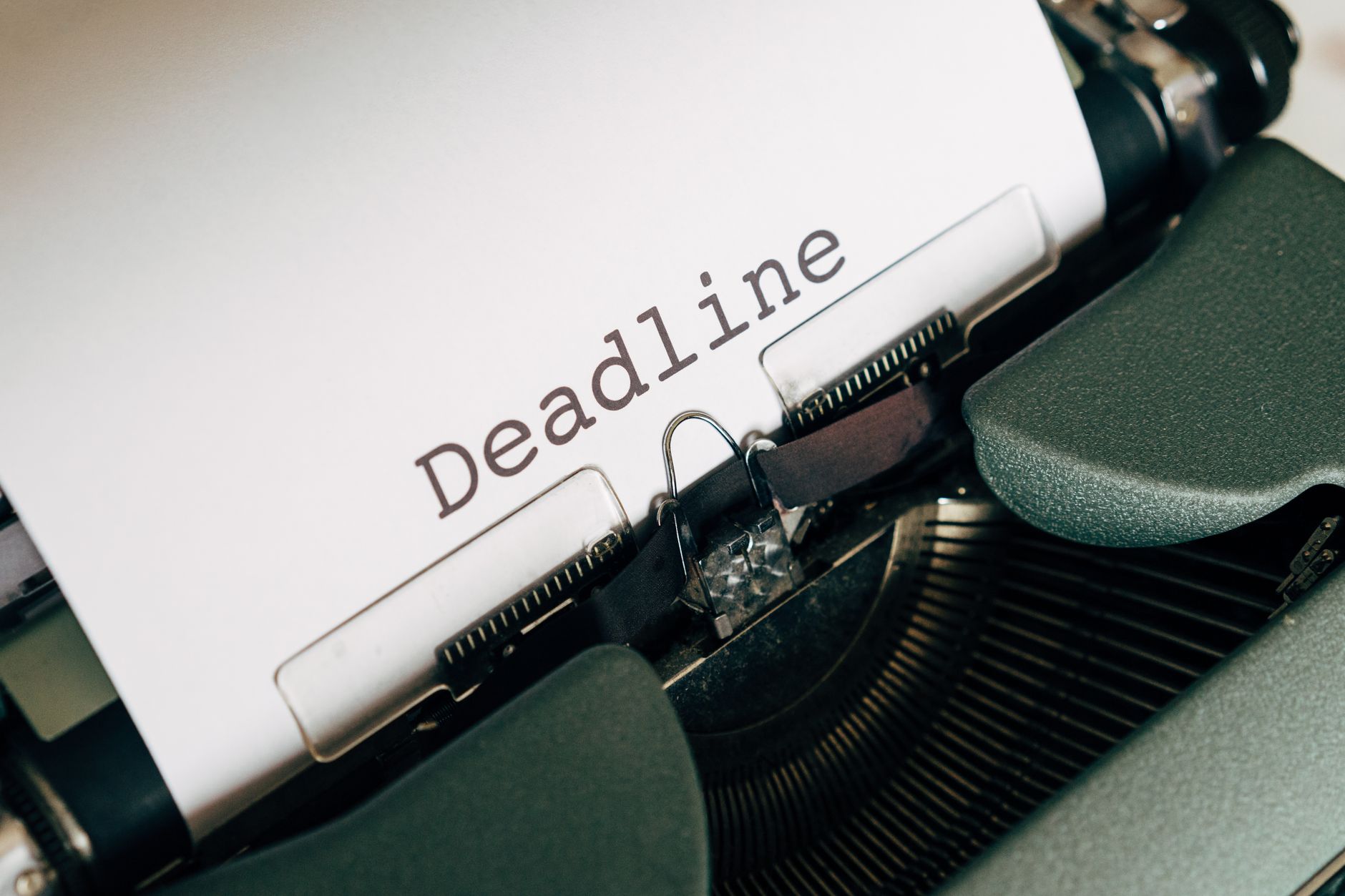
Dateline vs deadline is one of those confusions that feels harmless until you see it in print. Both words contain "line" and both show up in professional contexts, so the swap is understandable. But they don't mean the same thing, and using one where you meant the other signals a gap in vocabulary that careful readers will notice.
What a dateline is
A dateline is a line of text at the opening of a news article or dispatch that tells the reader where and sometimes when the story was filed. You see it at the start of wire-service reports: "LONDON, Aug. 18" or "CAIRO, Tuesday." The dateline's job is geographic and temporal attribution. It answers the question: where did this reporting come from?
The word dates to 19th-century journalism. Correspondents filed dispatches from distant cities, and editors needed a quick way to flag the origin. Print the city, print the date. Done. The format stuck.
Dateline also names an American television newsmagazine, Dateline NBC, which borrowed the journalistic term deliberately. Outside of that show and wire-service conventions, "dateline" rarely appears in everyday writing. If it shows up in your draft, it should be in a journalism or broadcasting context.
What a deadline is
A deadline is a fixed point in time by which something must be completed. It's the due date. Miss it, and there are consequences: a grade drops, a submission is rejected, a contract clause triggers, a publication slot disappears.
The word has a grim origin. In American Civil War prison camps, a physical line was drawn around the perimeter. Prisoners who crossed it were shot. That boundary was called a deadline. By the late 19th century the word had migrated into newspaper printing, where it referred to the cut-off time after which copy couldn't make the press run. The sense of "point of no return" survived; the lethal geography did not.
Today, deadline is one of the most common nouns in professional English. Writers, developers, lawyers, and project managers all work with deadlines. It needs no qualifier: "the deadline is Friday" carries the full meaning on its own. This is also the word that pairs naturally with compound phrases: deadline pressure, deadline extension, missed deadline.
How to tell them apart every time
The easiest fix is to focus on what each word modifies. A dateline attaches to a place: it marks where something originated. A deadline attaches to a time: it marks when something must end. If your sentence is about a due date or a cut-off point, the word is always deadline. If your sentence is about the origin line on a news report, the word is dateline.
A quick test: can you replace the word with "due date"? If yes, write deadline. If the sentence is about geography or journalistic attribution, write dateline.
You might also notice that many sound-alike errors work the same way: the confusion starts in speech and migrates into writing. Just as taught and taut get swapped because they sound identical out loud, dateline and deadline slide into each other because they share so much phonetic territory. The fix in both cases is knowing the meaning, not the sound.
Examples in sentences
Seeing both words used correctly side by side tends to lock in the distinction:
- Dateline: "The dispatch carried a dateline of Kyiv, March 3."
- Dateline: "Wire-service editors expect the dateline to appear above the first paragraph."
- Deadline: "The manuscript deadline is the first Friday of next month."
- Deadline: "She asked for a deadline extension but the editor refused."
Notice that deadline fits anywhere a due date is expected. Dateline fits only in contexts involving journalism, broadcasting, or formal dispatch writing.
A note on professional writing
Confusing dateline with deadline won't usually obscure meaning entirely. Context rescues the reader. But it does create a moment of friction, and friction costs credibility. In journalism, where both words appear on the same page, the distinction matters especially. A reporter who writes "the dateline for this piece is tomorrow" has used the wrong word in the one profession where both words have precise, established meanings.
Getting this right is the same discipline as getting any other pair right: it's not about memorising rules, it's about knowing what you're actually trying to say. Deadline means cut-off time. Dateline means place of origin. Each word is precise. The way to keep them straight is to think about whether you're talking about space or about time, and write from there. Mixing up similarly structured words is common, just as breach and breech trip up writers who haven't paused to consider what each one actually covers.