When writers search for the right spelling of firey vs fiery, the instinctive choice is almost always "firey." It looks like it should be right. "Fire" plus "-y" gives "firey," the same way "smoke" plus "-y" gives "smoky." But English doesn't work that consistently, and in this case the correct spelling is fiery, not "firey." The misspelling is one of the most common in written English, entirely because the word sounds nothing like it looks.
The correct spelling is "fiery"
"Firey" does not appear in any major dictionary. It isn't an accepted variant, an archaic form, or a regional spelling. It's a misspelling, full stop. The standard adjective is fiery, and that's the only form you should use in formal or published writing.
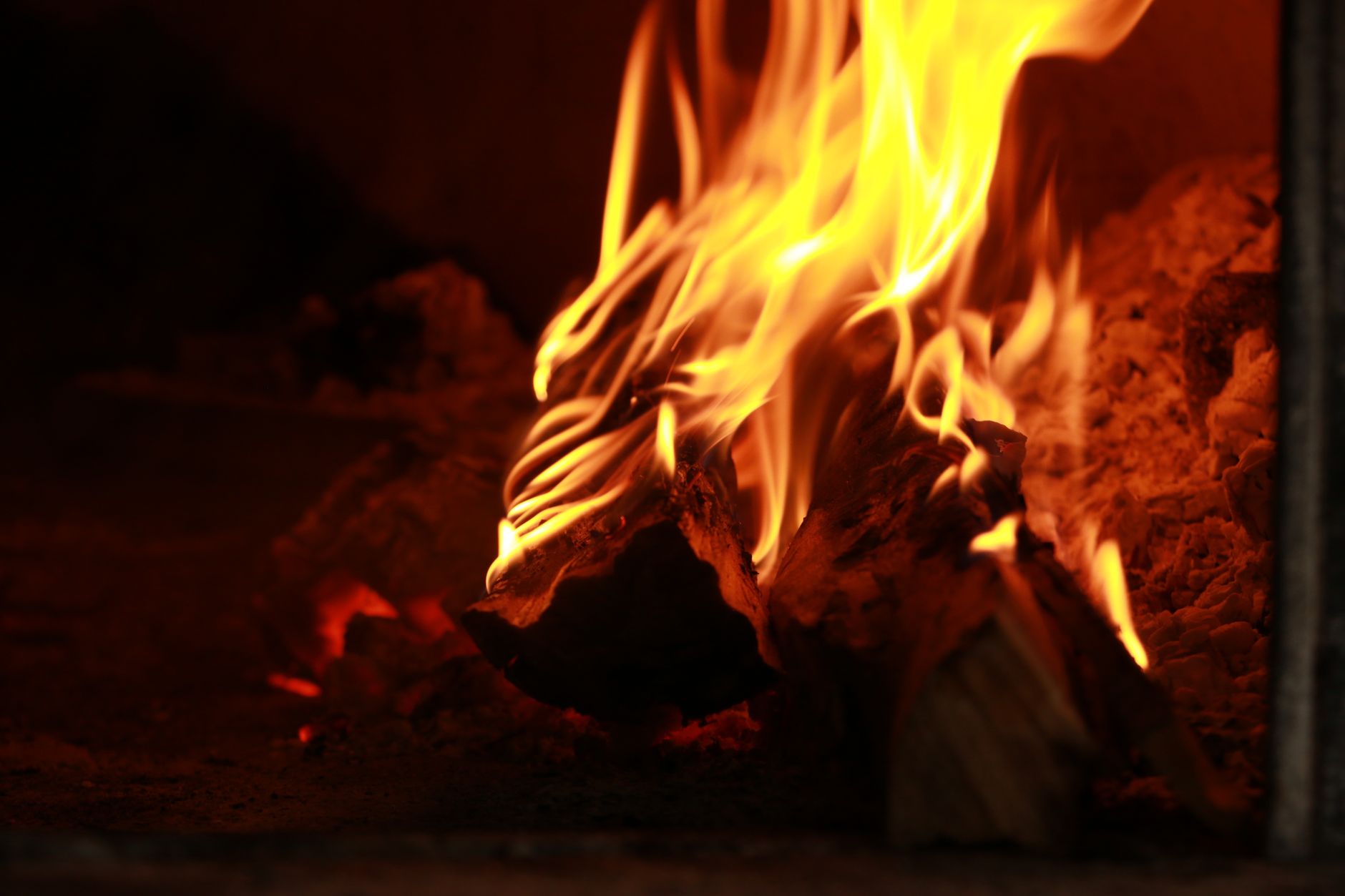
Fiery means relating to, resembling, or consisting of fire. It also extends to personality and emotion: a fiery temper, a fiery speech, a fiery exchange. The word covers heat, intensity, and passion in roughly equal measure.
Why "firey" feels so natural
The logic behind the misspelling is completely understandable. The root word is "fire," and English routinely adds "-y" to nouns to make adjectives: rain becomes rainy, sun becomes sunny, ice becomes icy. Following that pattern, "fire" should become "firey."
The problem is the "-e" in "fire." Standard spelling rules say that when a word ends in a silent "-e," you drop the "e" before adding a vowel suffix. So "fire" loses its final "e" when you add "-y," which should give you "firy." That's also wrong, though, and this is where the word gets genuinely irregular.
In the case of "fiery," the "e" doesn't get dropped. It migrates. The letters swap positions: the "-re" at the end of "fire" flips to "-er" before the suffix, giving you f-i-e-r-y. The result is a word where the "ie" is in an unexpected place, which is exactly why readers and writers consistently second-guess it.
How to remember it
The most reliable memory trick is to think of the word "pier." The middle of "fiery" contains the same "-ier-" pattern: f-ier-y. Say the word slowly and notice that the first syllable is closer to "fire" than "fee." The spelling follows the sound if you slow it down.
Another approach: write it out as two parts, fi + ery, and remember that the "e" from "fire" slides left, not right. It's a small mental pivot, and after doing it once or twice the correct form sticks.
Examples of "fiery" used correctly
- The sunset painted the horizon in fiery shades of orange and red.
- She delivered a fiery speech that left the audience on its feet.
- The chilli left a fiery burn at the back of his throat.
- The two coaches had a fiery exchange after the final whistle.
None of those sentences would accept "firey." Spell-checkers will flag the misspelling in every major word processor, but the error still slips through in social media posts, informal emails, and unedited drafts where auto-correct doesn't catch it.
Is "firey" ever acceptable?
No. Some spelling variants sit in a grey zone where different style guides disagree. This isn't one of them. "Firey" has no entry in Merriam-Webster, Collins, or the Oxford English Dictionary. It isn't treated as a variant spelling or a historical form. Using it in professional writing will read as a spelling error to any careful reader.
This puts "firey" in the same category as other confident-looking misspellings. Much like the error at the heart of greatful vs grateful, the misspelling feels logical until you know the actual rule. And like that case, the correction is simple and permanent once you've absorbed it.
Related adjectives that cause similar confusion
"Fiery" belongs to a small group of English adjectives where the standard suffix rules produce an unexpected result. "Holey" (full of holes) and "gluey" follow similar irregular paths. None of them are as frequently misspelled as "fiery," largely because "fire" is such a common root word and appears in so many contexts.
Spelling errors that stem from sound rather than ignorance tend to persist longer than other kinds of mistakes. The phenomenon is the same one behind the epitomy vs epitome confusion: the spoken word points in a different direction from the written one, and writers fill the gap with the spelling that matches their ear. "Fiery" looks wrong to many people even when they know it's right.
Quick reference
Correct: fiery
Incorrect: firey
Use for: something resembling or involving fire; intense heat, passion, or anger
Root word: fire (with the "-re" letters reversing to "-er" before the "-y" suffix)
Write "fiery" every time. If your draft says "firey," change it before it goes out.