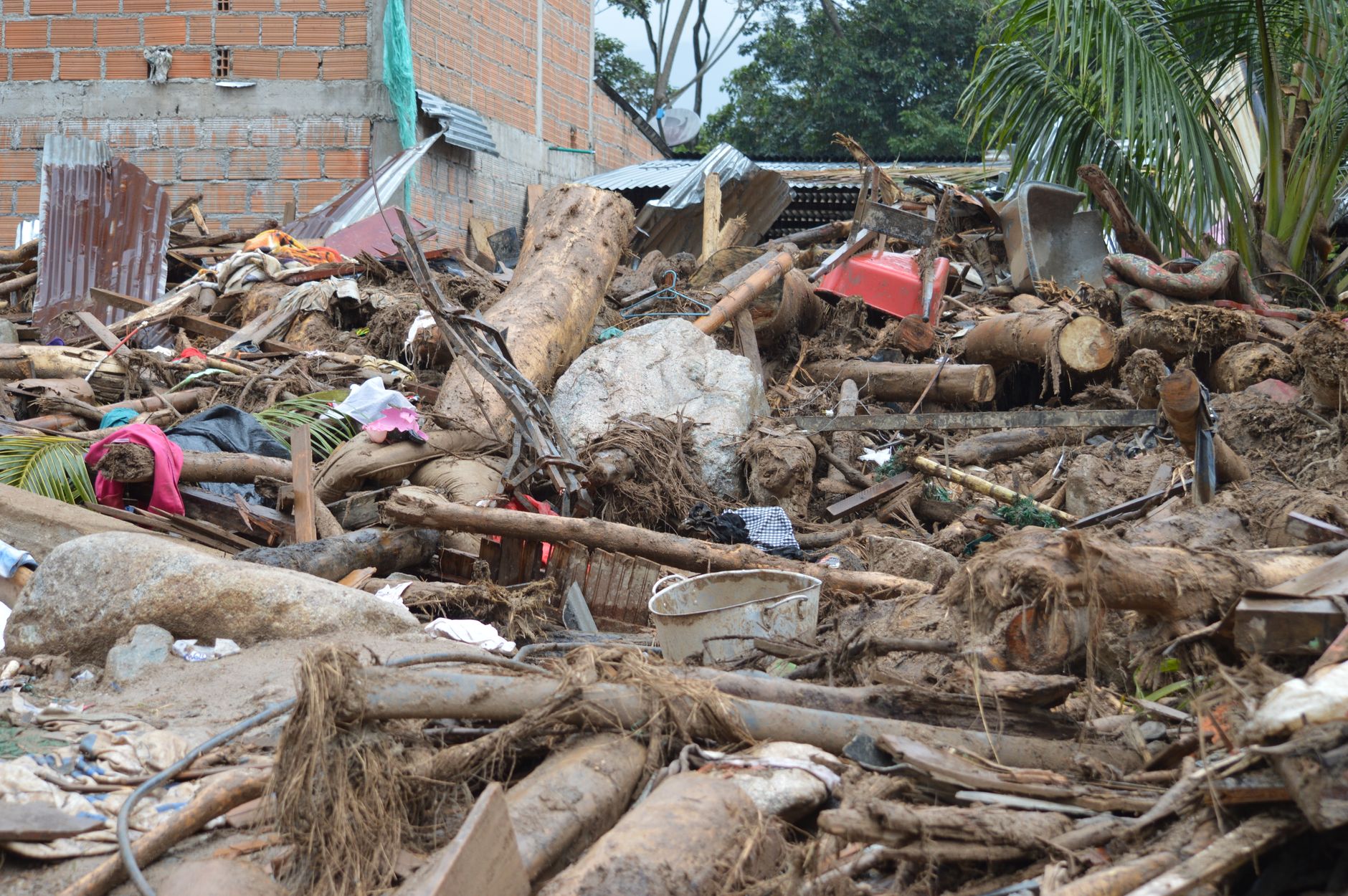
If you've typed "reeking havoc" and wondered whether it looked right, you're not alone. "Reeking havoc vs wreaking havoc" is one of those errors that slips past spell-checkers because both words are real. Only one phrase, though, carries the meaning you're after: wreaking havoc. "Reeking havoc" is a mishearing that's become widespread, and it's worth understanding exactly why it happens.
What "wreaking havoc" actually means
To wreak means to inflict or bring about something destructive. The word comes from Old English wrecan, meaning to drive out or avenge. It's almost always followed by "havoc" in modern usage, because the verb has fallen out of common use elsewhere. Havoc means widespread destruction or disorder, and the pairing is centuries old.
When you say something is "wreaking havoc," you're saying it's causing serious chaos or damage. A storm can wreak havoc on a coastline. A virus can wreak havoc on a supply chain. A toddler can wreak havoc on a living room. The phrase describes the infliction of disorder, not a smell.
Why people write "reeking havoc" instead
Reek is a real word. It means to give off a strong, unpleasant smell, or more figuratively, to strongly suggest something bad ("this plan reeks of corruption"). Because "wreaking" and "reeking" sound similar in fast speech, and because "reek" carries a vaguely negative charge, the wrong word slots in without triggering any obvious alarm.
This is an eggcorn: a word or phrase substituted for a similar-sounding one, where the replacement still makes a kind of intuitive sense. Like invested interest vs vested interest, the error feels plausible until you look at what the words actually mean.
There's no such construction as "reeking havoc" in standard English. Nothing reeks havoc. Reek doesn't work as a transitive verb in that sense. If you wrote it, the sentence doesn't parse correctly, even if the reader guesses your meaning from context.
How to remember the correct form
The trick is simple: wreak goes with destruction. Think of related words like "wreck" and "wreckage." They share an etymological neighbourhood, and the similar shape helps the word stick.
You can also remember it by contrast. Reek is about smell. A drain reeks. A locker room reeks. Havoc is not a smell. So if you catch yourself writing "reek" next to "havoc," the sentence is telling you it doesn't make sense.
One more anchor: the past tense of wreak is wreaked, not "wrought." Some writers assume "wrought havoc" is the historical past tense. It isn't standard today, and "wreaked havoc" is the accepted past-tense form across modern style guides.
Quick examples of correct usage
- "The hurricane wreaked havoc along the entire coastline."
- "The software bug wreaked havoc on the company's database."
- "The escaped goats wreaked havoc in the vegetable garden."
Notice that in every case, something causes damage or disorder. Wreak is the mechanism; havoc is the result.
Is "reeking havoc" ever acceptable?
No. It isn't a variant spelling or an informal alternative. It's simply wrong. Unlike some errors that have gained partial acceptance through widespread use, "reeking havoc" hasn't crossed that threshold. Major style guides don't recognise it, and any careful reader will notice it. The same applies to other confusion pairs, such as the spelling trap covered in epitomy vs epitome: when only one form is correct, the other isn't a casual alternative.
The Merriam-Webster entry for "wreak" defines it as "to cause the infliction of (vengeance or punishment)" and specifically lists "wreak havoc" as an example phrase. There's no parallel entry for "reek havoc" because the construction doesn't exist.
The bottom line
Write wreaking havoc. Every time. The word you want is wreak, not reek. One inflicts destruction; the other describes a bad smell. They're not interchangeable, and no amount of fast speech makes them the same word.